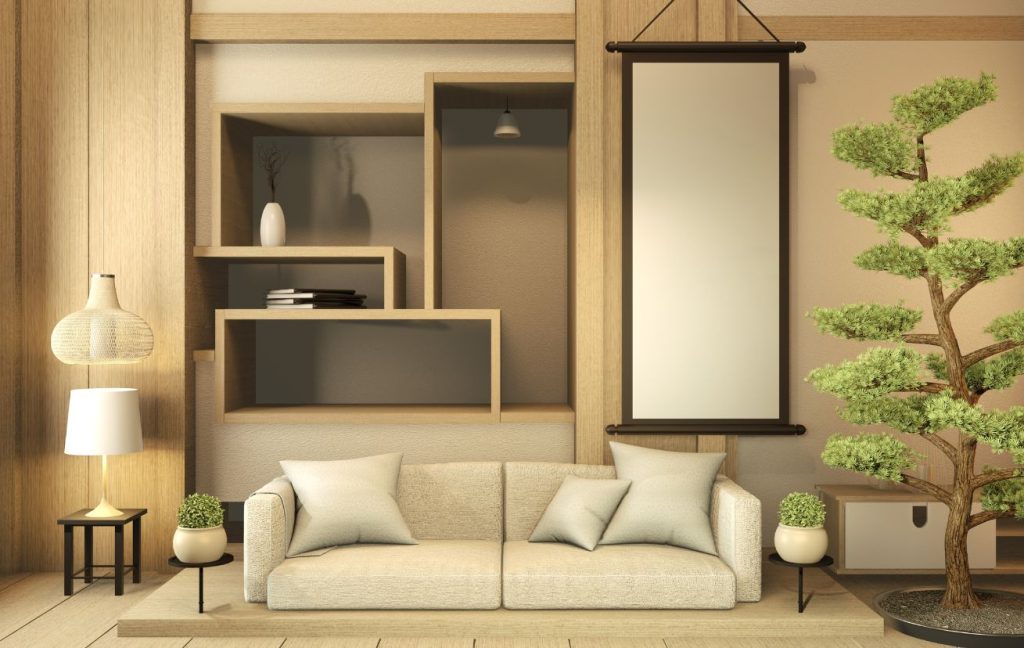
Elevate your living room aesthetics by incorporating a Japanese touch. Embrace a modern interpretation that utilizes clean, natural materials, emphasizing minimalistic design for a refreshing and comfortable ambiance.
Japanese home styling emphasizes natural elements, employing subtle earthy tones for a visually pleasing and comfortable atmosphere. To infuse your living room with Japanese influences, focus on natural materials and minimalism. Avoid overcrowding with unnecessary furniture, creating open and spacious layouts. Here are some design ideas inspired by Japanese culture:
Floor Plan
In contrast to Western preferences for modern furniture, Japanese design favors minimalism. Opt for a bare minimum of furniture and refrain from adorning walls with excessive photographs or showpieces. This approach creates a clean, spacious look that feels lighter and visually appealing.
Naturally Occurring Materials
Embrace the Japanese reverence for nature by incorporating naturally occurring materials. Use bamboo, rocks, and timber abundantly in your living room. Designing floors with bamboo and walls carved from rocks imparts an authentic Japanese feel. Keep furniture low and close to the ground to maintain the aesthetic.
Worship Nature
Reflect the Japanese love for nature in your living room. Install full-length glass windows, especially if surrounded by lush green lawns, to visually connect with nature. This not only enhances aesthetics but also brings the beauty of the outdoors closer to your living space.
Authentic Japanese Home Decor
Enhance the Japanese look by incorporating authentic home decor items. With a spacious floor plan, consider tatami straw mats to create the Japanese look and feel. Use rice paper screens to elegantly divide rooms. These subtle yet crucial details can elevate your living room to embody the authentic Japanese aesthetic.
The deeper philosophy behind Japanese interiors
Japanese design is not a style that can be copied by inserting the right accessories. It is the visible expression of a worldview — one rooted in Shinto beliefs, Zen Buddhism, and centuries of refinement in the use of space. To bring Japanese elements into your living room authentically, it helps to understand the principles behind them.
Ma: the beauty of negative space
The concept of "ma" (間) refers to the meaningful use of empty space. In Western interiors, empty space is often seen as something to be filled. In Japanese design, it is an active element — a pause that gives meaning to what surrounds it.
A living room designed with ma in mind might have a single low table, a small arrangement of cushions, and a great deal of unoccupied floor. The eye has room to rest. The mind has room to settle. This is the opposite of the cluttered, photo-covered walls that characterise many Western interiors.
Wabi-sabi: finding beauty in imperfection
Wabi-sabi is the appreciation of things modest, aged, and imperfect. A ceramic bowl with a hairline crack, a wooden surface weathered by years of use, a paper lantern with a slightly uneven shape — these are all expressions of wabi-sabi.
In the living room, this translates to materials that age well: unlacquered wood, hand-thrown pottery, raw linen, untreated paper. Avoid anything that looks factory-perfect or overly polished. The goal is not rustic decay, but the patina of time well lived.
Shibui: subtle, complex beauty
Shibui (or shibusa) is the quality of understated, complex beauty. A shibui object is not flashy; it reveals itself slowly. A plain clay vase in a muted colour. A wooden floor that has darkened beautifully with age. A linen curtain that filters the light without dominating the room.
This principle argues against the urge to make every element statement. Restraint is the Japanese answer to the question of how to make a room feel rich.
Practical applications
The principles above translate into specific design decisions that can be applied to any living room, regardless of its size or current style.
Flooring
Bamboo is the most accessible option for Japanese-inspired flooring. Modern engineered bamboo is durable, environmentally responsible, and visually striking. If replacing floors is not an option, large woven rush mats can be layered over existing flooring to create the visual texture of tatami.
For a more Western-friendly approach, consider wide-plank oak or pine with a matte finish. The grain provides the visual interest; the lack of shine keeps it understated.
Walls
The classic Japanese wall treatment is clay plaster (shikkui) over a timber frame. For most modern homes, this is impractical. A close approximation is a limewash or textured paint in muted, earthy tones: soft whites, warm greys, gentle clay colours.
Avoid the urge to hang many pictures. A single large piece — perhaps an ink scroll or a simple framed textile — is more in keeping with Japanese aesthetics than a gallery wall.
Windows and light
Full-height windows are central to Japanese design philosophy, which prizes the connection between interior and exterior. If your living room has small windows, consider whether enlarging them is feasible. The change in how the room feels will be substantial.
For window treatments, avoid heavy drapes. Roman shades in raw linen, or simply a wooden valance, can soften the window without overwhelming it. Shoji-style screens — wooden frames with translucent paper — are an authentic option, though they need careful maintenance.
Furniture
Japanese furniture tends to be low to the ground. In a Western home, this can feel impractical. A reasonable compromise is to keep the major pieces (sofa, chairs) at conventional heights, but add lower elements: a floor cushion arrangement, a low coffee table, or a bench that doubles as seating.
Materials should be natural: solid wood frames, linen or cotton upholstery, leather with a matte finish. Avoid shiny metals, plastic, or anything that looks overly industrial.
Bringing nature indoors
The Japanese reverence for nature — what designers often call "biophilia" — is one of the most portable elements of the style. Even a small living room can benefit.
Plants
Traditional choices include:
- Bonsai — for those willing to commit to the care, a well-shaped bonsai is the ultimate Japanese plant.
- Ikebana arrangements — formal Japanese flower arrangements that emphasise line, asymmetry, and negative space.
- Moss and ferns — for shaded corners, these create the feel of a forest floor.
- Bamboo — fast-growing, low-maintenance, and visually striking in any size.
The principle is variety in restraint. Choose three or four plants that complement each other in form and colour, rather than filling every corner.
Natural materials
Beyond plants, the inclusion of natural materials is essential:
- A stone or ceramic water basin in a quiet corner
- A small fountain or tabletop water feature
- River stones in a shallow tray
- Driftwood as a sculptural element
These additions are not decorative flourishes; they are reminders of the natural world that the design philosophy centres on.
What to avoid
Japanese-inspired interiors are easily reduced to pastiche by including too many literal elements. The most common mistakes include:
- Faux tatami mats made of plastic, which look cheap and undermine the natural aesthetic.
- Mass-produced "Asian" decor — anything from generic Buddha statues to "oriental" lanterns — that signals theme rather than style.
- Bright red accents — the colour associations in Japanese design favour muted earth tones, not the saturated palette often associated with "Chinese" decor.
- Excessive lanterns — a single paper lantern is elegant; a room full of them looks like a restaurant.
The goal is atmosphere, not theme. Visitors should feel that the room is calm and considered, not that they have stepped into a sushi bar.
Final thoughts
Bringing Japanese elements into your living room is less about adding specific objects and more about changing the way you think about the space. The principles of ma, wabi-sabi, and shibui will transform any room if applied with patience and restraint.
Start with the biggest impact changes — the floor, the walls, the lighting — and let the smaller details evolve over time. A truly Japanese-inspired room is never finished; it grows and changes with the seasons and the years. This organic quality is part of what makes the style endure.